
At a glance: this guide explains who this tine instrument is for and outlines its practical benefits for making music. It shows why a model with semitones expands the repertoire you can play.
Background: the chromatic version provides all 12 notes in each octave through a double row of tines. It lets you play in every key without compromising the melody.
Key differences: more tines, accessible accidentals, and greater weight and cost than diatonic models. These factors affect your choice and everyday use.
In this article, you will learn about the full range of notes, choosing a model, holding the instrument, tuning it with a hammer, basic techniques, and practical examples to help you save time and make steady progress.
Understanding the chromatic kalimba: definitions, notes, and essential differences
Here is an overview of the available notes, the tine layout, and what they mean for your playing.
The chromatic scale contains 12 notes per octave: seven natural notes (C, D, E, F, G, A, B) and five accidentals. It provides every semitone needed to play classical, jazz, and pop pieces faithfully.
The functional difference is clear. A diatonic model offers 7 notes per octave. A chromatic model adds semitones through a double row of tines. This lets you change keys freely and tackle more complex pieces.
The physical layout makes playing easier: the lower row at the front follows the diatonic scale, while the upper row at the back contains the accidentals. Most versions have an average number of 34 tines, sometimes 42, compared with around 17 on diatonic models.
“Semitones open up harmonic possibilities that transform how we teach and create music.”
| Criterion | Diatonic | Chromatic | Impact |
|---|---|---|---|
| Notes per octave | 7 | 12 | More harmonic colors |
| Layout | One row | Double row (front and back) | Slides and accidentals within reach |
| Average number of tines | Around 17 | Around 34 | More complex to learn |
- Ergonomics: alternating between left and right makes polyphonic playing easier to follow.
- Use: ideal for demanding transcriptions, such as a famous piano passage.
Chromatic kalimba: who is it for and how do you use it?
Students, composers, accompanists, and improvisers will find this instrument useful when they need to move beyond the limits of a single key.
Getting started is simple: begin with the front row, which works like a 17-key model, then gradually add the accidentals on the back row.

Practice routine: keep sessions short and regular, learn to spot the accidental keys, and work slowly with your thumbs to build accuracy.
- Suitable players: motivated beginners, composers seeking richer chords, and singers who want to change keys.
- Maintenance: tune the kalimba regularly with a hammer and a chromatic tuner.
- Essential equipment: a hammer, tuner, and carrying case.
| Criterion | Advantage | Challenge |
|---|---|---|
| Musical versatility | Play jazz, classical music, and pop | Longer learning curve |
| Getting started | Accessible front row | More keys to memorize |
| Maintenance | Can be tuned precisely | Requires a hammer and tuner |
Initial cost: around €100–€200. Although heavier, the instrument is still well suited to performance and composition.
Choosing between a chromatic and diatonic kalimba for your goals
Before buying, decide whether you need a versatile instrument that plays in every key or a simple, lightweight model.
Musical potential: a chromatic model covers every key. It suits jazz, classical music, pop, and complex traditional repertoires.
Learning curve: the double row and number of tines (34 to 42) call for a more systematic approach. Start with the front row to make the first steps easier.
“Try different models and decide what matters most: repertoire, portability, or budget.”
| Criterion | Diatonic | Chromatic | Impact |
|---|---|---|---|
| Genres you can play | Simple melodies, meditation music | Jazz, classical music, and pop with key changes | Versatility or simplicity |
| Number of tines | Around 17 | 34 to 42 | Finding notes with your thumbs |
| Materials and maintenance | Often wood; lightweight instrument | Mostly wood; resonator box uncommon | Requires a tuner and hammer |
Getting to know the instrument: tines, keys, grip, and posture
Start with a steady grip and a clear understanding of where the tines are.
Grip and position: hold the instrument in both hands with steady palms. Your fingers at the back provide gentle support; keep your thumbs free to pluck the tines without damping their vibrations.
Resonance: do not block the resonance holes on the lower part of the back. Covering them reduces volume and dulls the tone.
Holding the thumb piano and navigating its range
The lowest note is in the center, on the longest tines. Higher notes lie toward the outer edges; learn their positions so you can play wide intervals confidently.
Basic playing techniques
Alternate your left and right thumbs regularly in fast passages. On models with many tines, slow the tempo and adjust the angle of your thumbs to avoid plucking neighboring tines.
- Look after your thumbs: some tenderness at first is normal; practice develops useful calluses.
- Recommended exercises: one-octave scales, mirrored ascending and descending patterns, and two-tine chords.
- Short routine: spend 10 to 15 minutes a day on thumb placement, resonance, and coordination.
Tip: when starting out, sit down and rest the instrument on your thighs for better control of each note.
Tuning a chromatic kalimba: method, tools, and apps
Reliable tuning is essential to getting the best from the instrument. It keeps notes at the right pitch and reduces the need for frequent adjustments during rehearsal or performance.
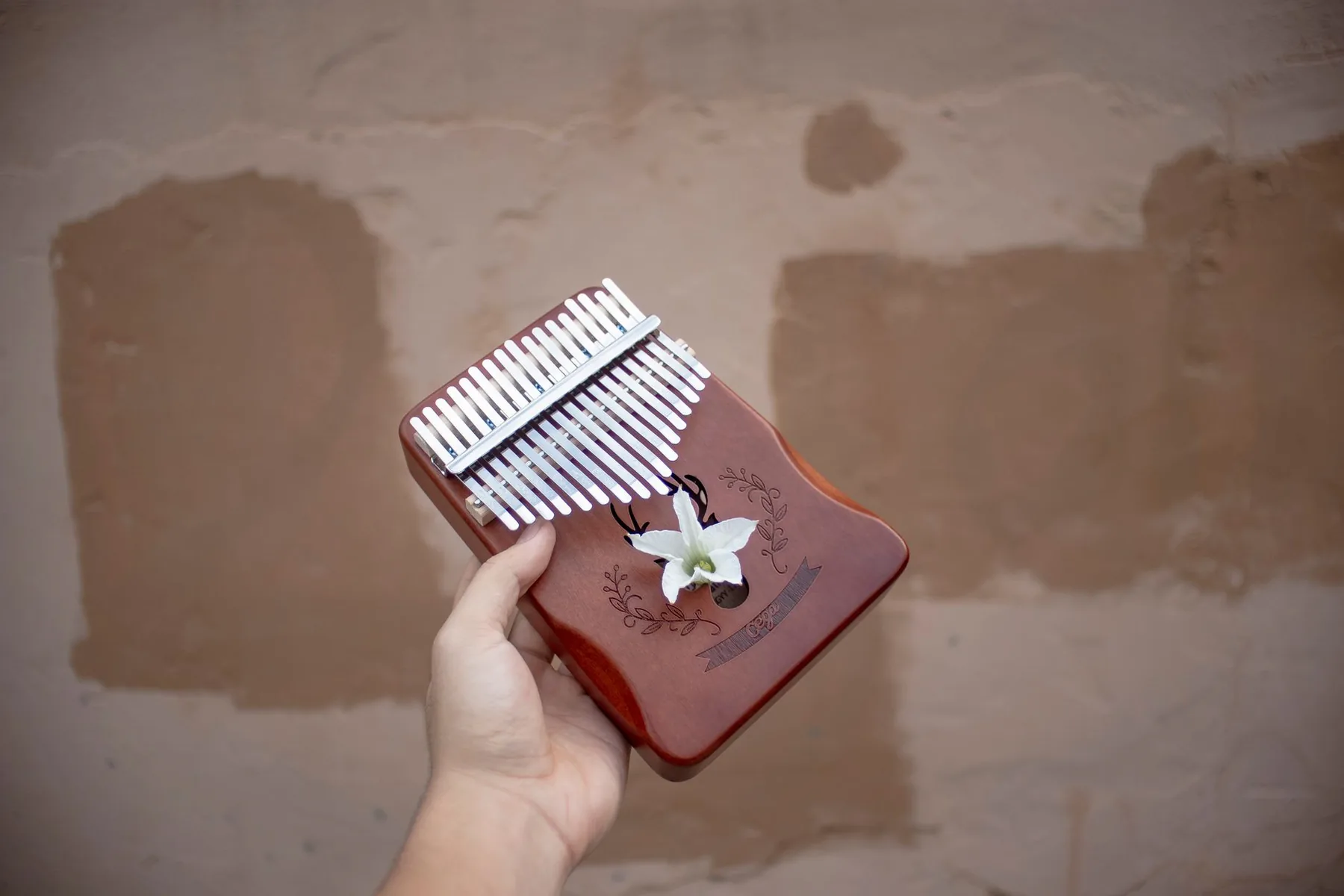
Essential tools and preparation
Get your tools ready: use a precise tuning hammer, a chromatic tuner (an app or a separate device), and a quiet place where you can check each note without background noise.
Step-by-step method
- Pluck a tine and check the note on the tuner.
- If the note is too low, gently tap the base of the tine upward to shorten it and raise its pitch.
- If the note is too high, tap the top of the tine downward to lengthen it and lower its pitch.
- Use small taps and check the note after each adjustment.
Stability, climate, and checks
Temperature, humidity, and use affect tuning. Check the essential tines before each session.
Changing keys and organizing your work
If you need to adapt the tuning for a piece, retune the diatonic row first, then check the row of accidentals. Write down the original tuning so you can restore it easily.
Tip: train your ear as well as using a tuner: listen for beating between notes to refine their tuning.
Basic techniques for playing a chromatic kalimba
A structured approach helps you master the double row and play with confidence.
Scale practice: start by playing the major scale, then the natural minor scale on the front row.
Next, add the chromatic scale, connecting front and back tines with small slides of the thumb.
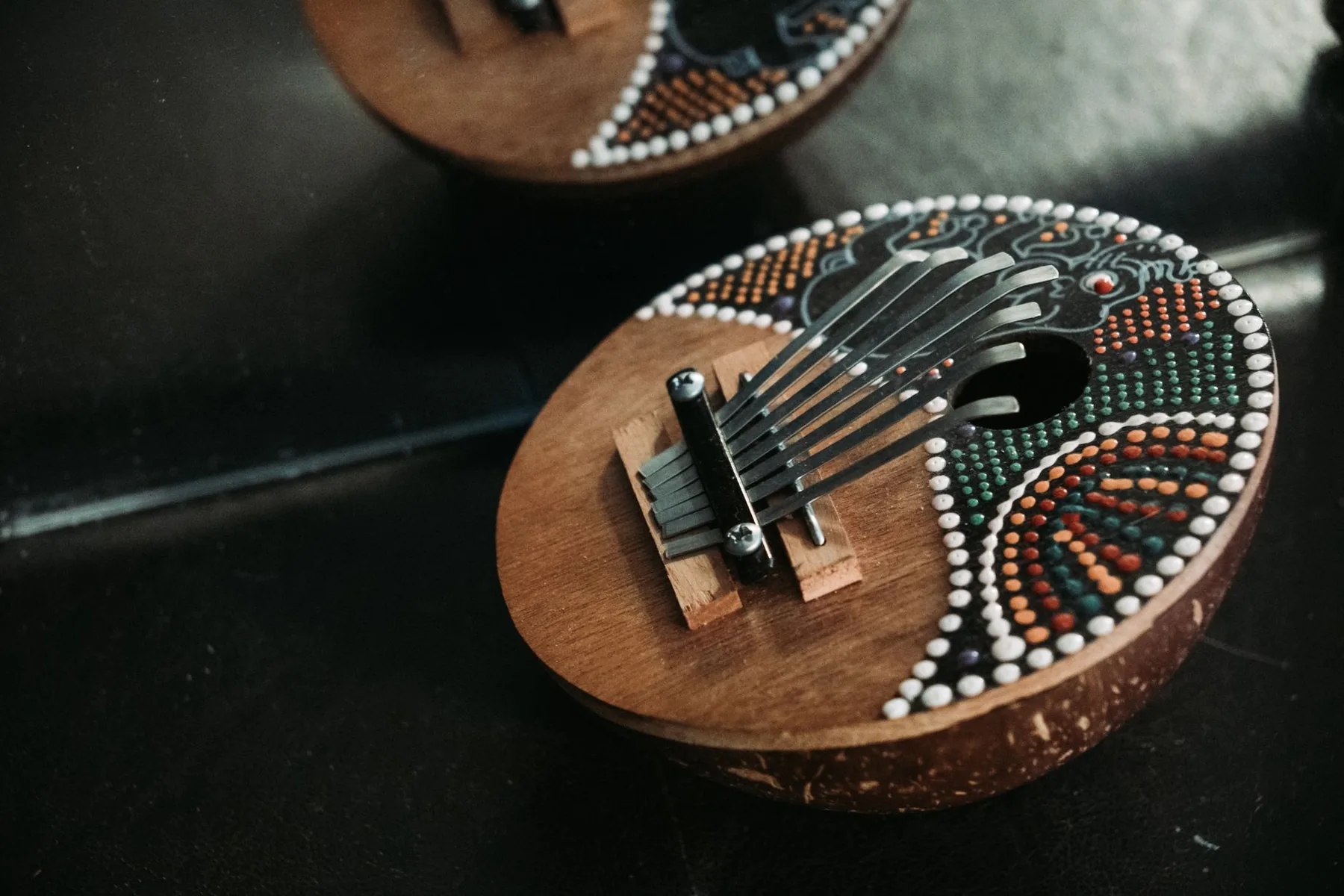
Alternating thumbs and playing cleanly
Practice short rhythmic passages, alternating your left and right thumbs to keep a steady tempo.
Maintain a consistent plucking angle and balance the volume between your hands.
Chords, arpeggios, and progressions
Start with two-note chords, then build triads.
Link simple progressions (ii–V–I) and develop arpeggios across several octaves.
Example: a chromatic figure leading to the third of a chord creates a smooth harmonic connection.
| Goal | Exercise | Recommended time |
|---|---|---|
| Finding notes | Major and minor scales across the full range | 5 to 10 min |
| Speed and consistency | Passages alternating the left and right thumbs | 10 min |
| Harmony | Two-note chords → triads → ii–V–I progressions | 10 to 15 min |
| Intonation | Check the tuning of important notes | 2 to 3 min |
Practice tip: keep a record of your exercises and increase the tempo gradually. Consistency supports learning and musical expression.
Examples and practical uses
Here are practical ways to tackle complex pieces and accompany a singer with confidence.
Playing demanding pieces such as “Für Elise”
Example: playing a piano passage with accidentals calls for both rows. Move between the front and back rows with a fluid motion.
Practice the slides slowly, isolate difficult bars, and note down fingerings that work well.
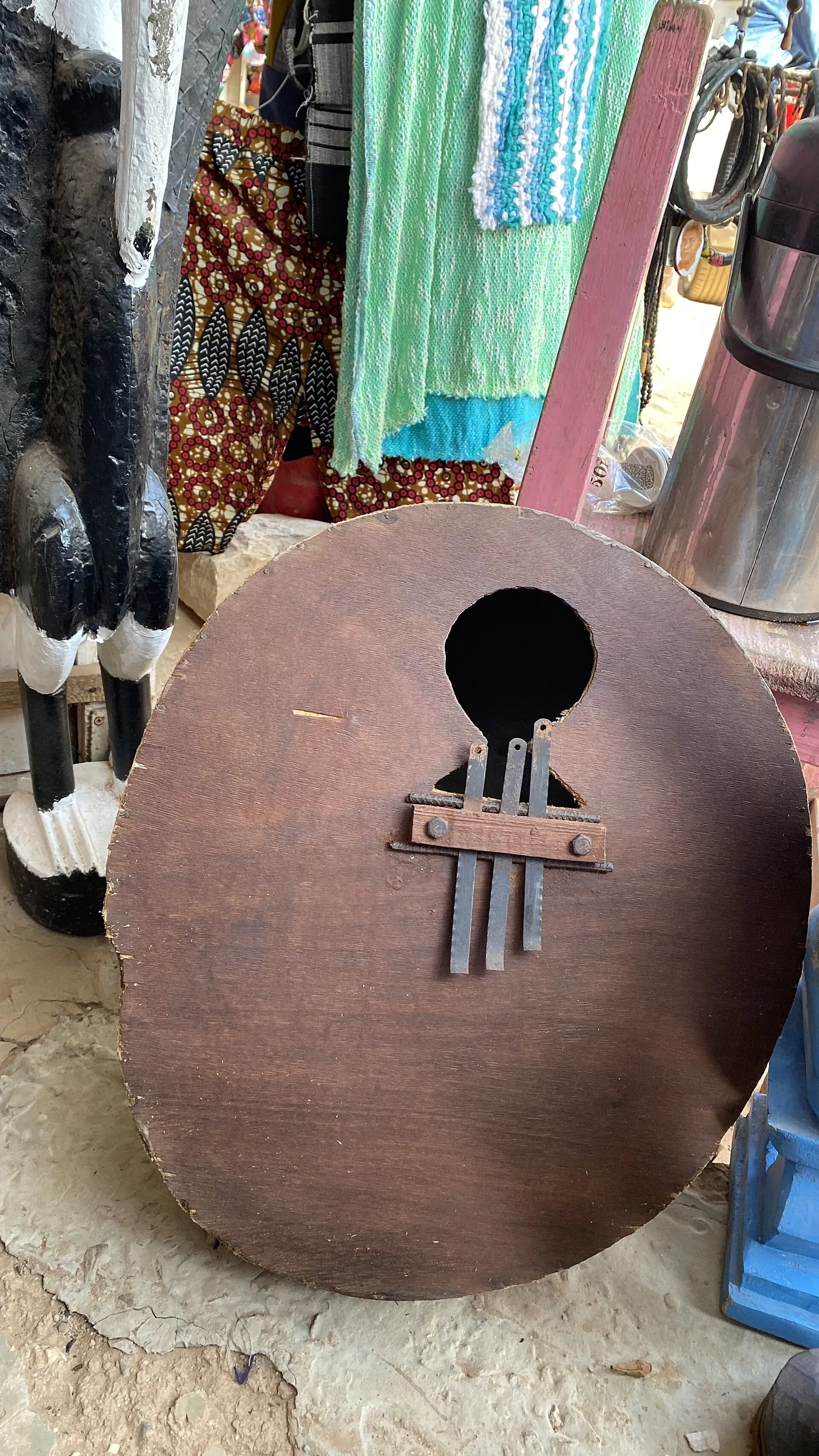
Accompaniment, improvisation, and composition
To accompany a singer, transpose quickly into the desired key and check the tuning of important notes.
- Build an accompaniment: use restrained arpeggios and passing chords.
- Improvise: aim for chord tones and use the neighboring semitone as an approach note.
- Prepare: check essential tines with a tuner and adjust them with a hammer if needed.
Performance tip: bring a case, an extra microphone, and a backup option for quick retuning.
To try different models or develop your playing, read everything you need to know about the kalimba.
Choosing a model in France: materials, resonator box, and quality
Choosing carefully helps avoid disappointment. Start with the material: most chromatic instruments sold in France are made of wood. It supports natural projection and a warm tone.
Acrylic bodies remain uncommon on these models. Resonator boxes are also relatively rare. Their absence limits some effects but often improves the stability of double-layer models.
Check the number of tines: most models have 34, sometimes 42. More tines extend the range from low to high notes, but require greater accuracy and a sound knowledge of the layout.
Essential accessories: a sturdy tuning hammer, a tuner (app or device), and a padded case. For performances, choose a suitable microphone and test the sound before buying.
| Criterion | Common option | Impact |
|---|---|---|
| Material | Wood | Warm tone, better projection |
| Resonator box | Often absent | Fewer effects, greater structural stability |
| Number of tines | 34 to 42 | Wide range, from low to high notes |
| Accessories | Tuning hammer, tuner, case, microphone | Maintenance, transport, amplification |
Tip: prioritize build quality and stable tuning over decorative features.
Conclusion
Conclusion
In a few lines, this guide sums up what matters most when choosing and playing an instrument with semitones.
A chromatic model lets you play in every key and perform demanding pieces, though it costs more and takes longer to learn. Start with the diatonic row, then gradually add the accidentals.
Uses: the full set of notes makes it easier to accompany a singer, improvise in different modes, and compose with colorful chords.
Essential maintenance: tune the kalimba regularly with a hammer and tuner (or an app), and check that it is in tune before each performance.
Practice in short, regular sessions to develop muscle memory. Choose the type and model according to your repertoire, portability needs, and comfort. To learn more, read everything you need to know about the kalimba and explore other models as your playing develops.