
Setting the scene. Thumb pianos are a family of lamellophone idiophones. Sound comes from tines plucked with the thumbs and is amplified by a sound box or soundboard.
A brief history. The mbira has existed in Africa for more than 3,000 years. Its tines, first made of bamboo and later of metal, accompany Shona rituals. In 1954, Hugh Tracey popularized a Western version with one diatonic row. In 2001, Peter Hokema created a hybrid combining a drum and a kalimba.
What you will find here. This article helps you quickly distinguish the names, identify standard 17-key models and extended versions with 21 keys or more. It also covers common materials, such as mahogany and acrylic, and uses including learning, relaxation, performance, and recording.
Buying criteria. Allow for a reasonable entry-level budget and look for bundles with a tuning hammer, a case, and thumb guards. Electroacoustic versions are useful for live performance.
Context and purpose: a clear comparison to help you choose among instruments called “thumb pianos”
This section summarizes the practical differences to guide your choice according to where and how you play.
Two designs dominate: the hollow model, whose sound box amplifies the sound and whose holes enable a “wah-wah” effect, and the flat model, a simple board ideal for travel and close-up recording.
The 17-key format remains the standard for learning. It makes sheet music and tutorials easier to find, directly affecting your choice and your progress.
Complete bundles improve the buying experience. A tuning hammer, note stickers, thumb guards, and a waterproof case make maintenance easier and protect the instrument.
The names mbira, likembe, and sanza refer to the same family, with cultural variations. Focus on how you will actually use the instrument: at home, in the studio, or on an amplified stage.
Choosing begins with deciding where and how you will play.
- At home or for relaxation: choose a flat model for its quieter sound.
- On stage or for storytelling: choose a hollow model for its projection and effects.
- For learning: a 17-key model and a complete bundle are recommended.
| Feature | Hollow (sound box) | Flat (board) |
|---|---|---|
| Projection | Strong, with “wah-wah” effects | Quiet, dry sound |
| Portability | Bulkier | Very light |
| Recommended use | Stage, gatherings | Studio, travel |
| Useful accessories | Case, tuning hammer | Thumb guards, stickers |
For historical background and technical comparisons, see the detailed guide here: technical guide to the mbira and timbila.
What they share: lamellophone idiophones played with the thumbs
With a movement of the thumb, tines resting on a bridge set off a chain of vibrations through the instrument’s body.
Tines, soundboards, and resonance: the basics
Each tine has one fixed end and one free end; plucking it sets the soundboard in motion. Wood or acrylic acts as a soundboard and amplifies the vibrations.
The body’s mass and internal volume, along with its openings, shape the resonance and tone of the notes. Adjusting the tines on the bridge affects clarity and tuning.
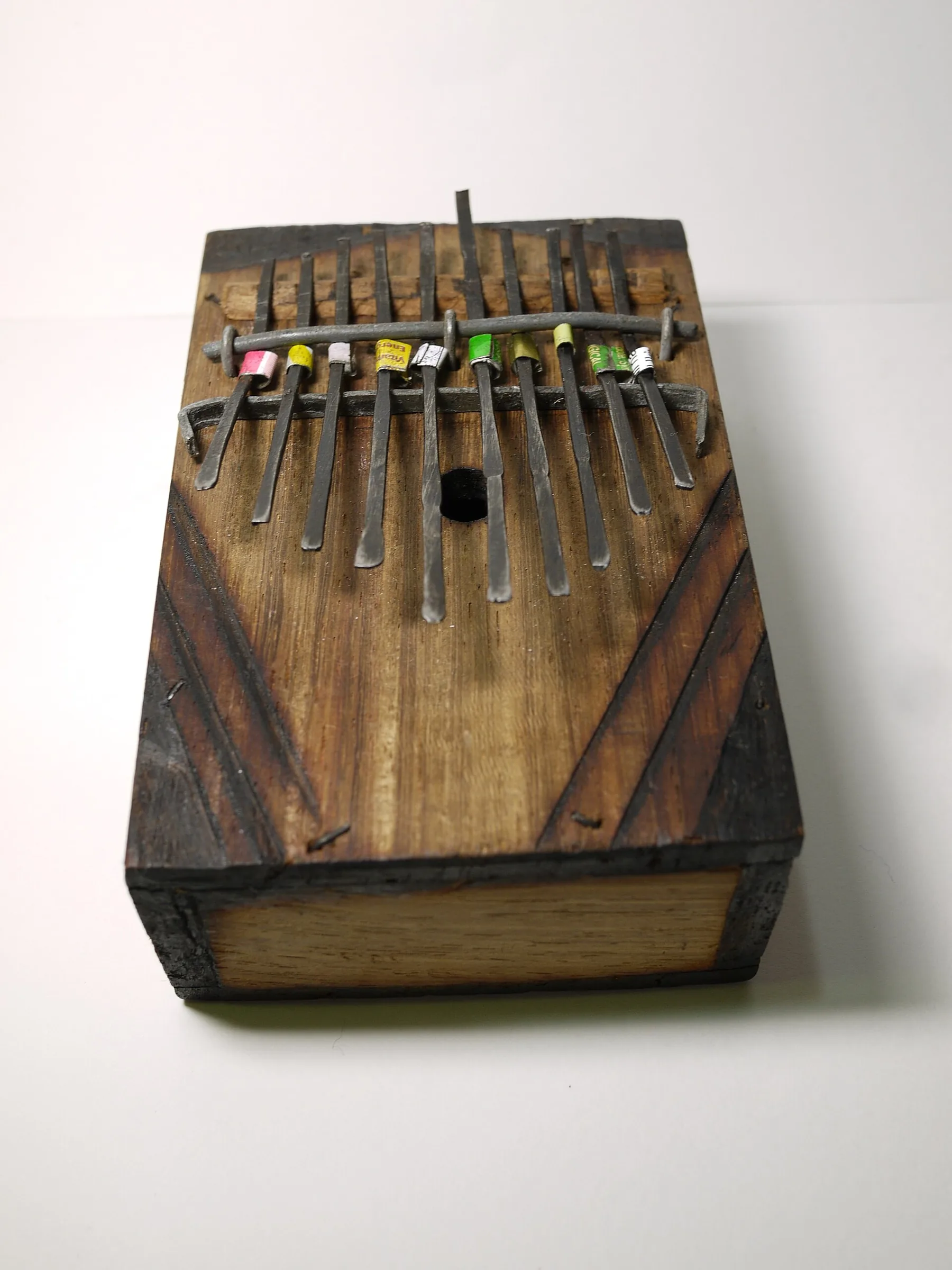
From bamboo to steel: how tines and their vibrations evolved
Historically, the tines were made of bamboo; switching to metal improved their lifespan, tuning stability, and dynamic range.
Tine length affects the notes: the longer a tine, the lower and more sustained its note. The density of the body and whether it is hollow or solid affect the attack and projection.
“The gesture is universal: the thumb guides the melody.”
To learn more about the instrument’s roots and variants, see the entry on the mbira.
Historical landmarks: from the ancient mbira to Hugh Tracey’s modern kalimba
The earliest documented uses date back more than 3,000 years on the West African coast. Another notable stage in the instrument’s history occurred around 1,300 years ago in the Zambezi Valley.
Spiritual role. Used by the Shona in Zimbabwe, the mbira serves as a means of mediation during ceremonies. It enables communication with spirits during healing rites, weddings, and offerings.
Materials and transformation
Tines changed from bamboo to metal. This improved the accuracy of the notes and the instrument’s durability. The wooden body remains essential to its resonance.
1954: standardization for Western audiences
In 1954, Hugh Tracey introduced a single-row diatonic version. Its hollow sound box and holes, which allow vibrato and a “wah-wah” effect, expanded its acoustic range.
“The arrangement of the tines and the pursuit of expressive resonance remain.”
| Period | Feature | Impact |
|---|---|---|
| 3,000 years ago | Earliest evidence | Cultural roots in Africa |
| About 1,300 years ago | Spread through the Zambezi Valley | Stronger ritual role |
| 1954 | Standardized Western version | Worldwide adoption and commercial production |
Kalimba and mbira: differences in design, tuning, and sound
The arrangement of the tines and the resonating body turn the same playing motion into very different tones.
Tine arrangement. Hugh Tracey’s version favors a single diatonic row, often with 15 to 17 tines, designed to make reading music and learning easier. A traditional mbira uses two rows and more complex repeating patterns suited to layered rhythms.
Tuning and notes. Standardized tuning makes the instrument more accessible to Western players, while traditional tunings are often non-equal-tempered and sometimes omit notes according to local modes. Tuning directly affects the sound and the choice of repertoire.
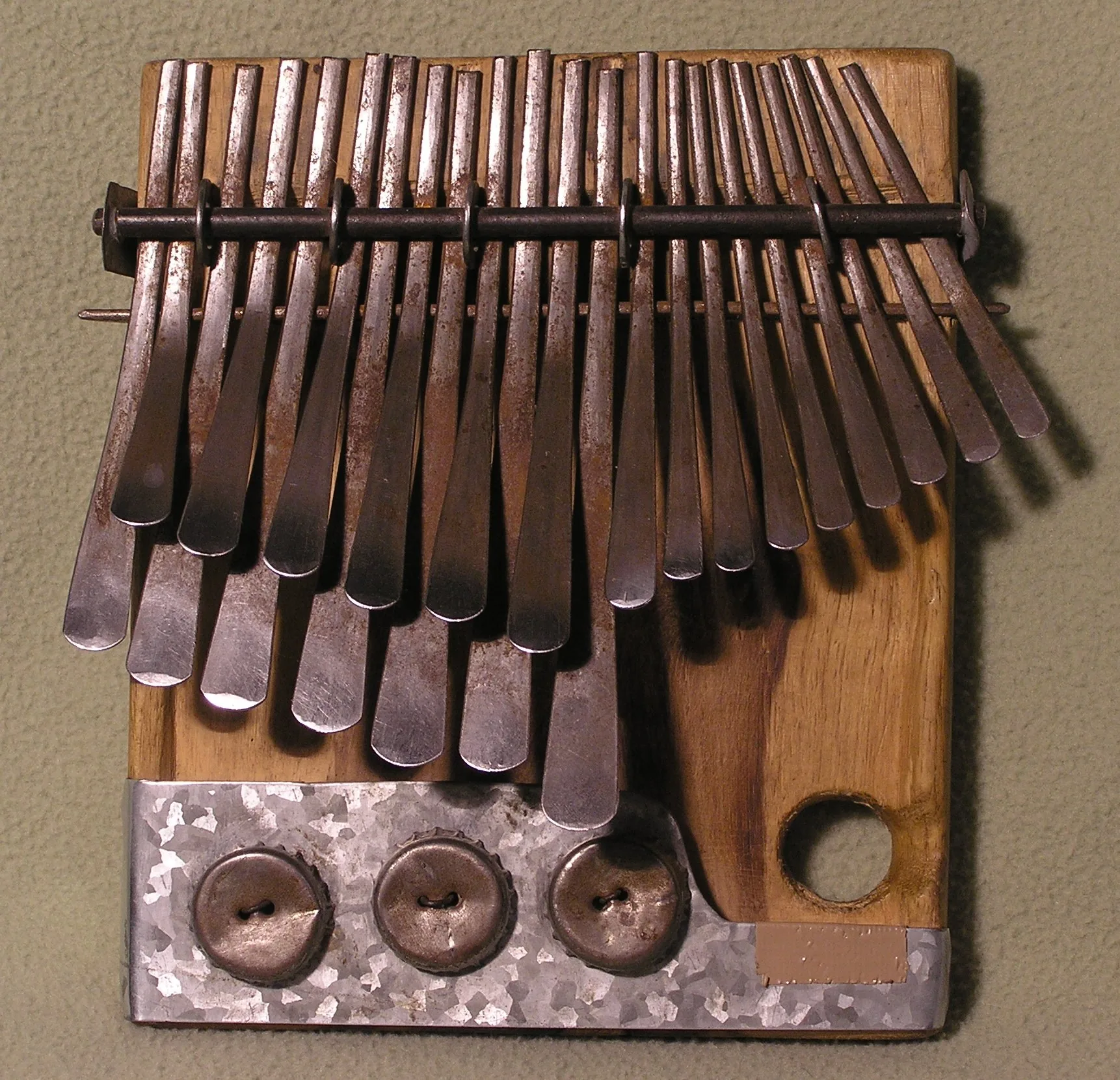
Effects and materials
Holes in the sound box let players control vibrato and a “wah-wah” effect as they play. Mbiras may have bottle-cap buzzers or a gourd resonator, producing a vibrating buzz.
Metal tines are shaped differently according to the design, changing the attack and harmonic richness.
| Aspect | Single row | Double row |
|---|---|---|
| Playing from notation | Easy, melodic | Complex, rhythmic |
| Tuning | Standard diatonic | Traditional, non-equal-tempered |
| Effects | Holes for “wah-wah” and vibrato | Bottle-cap buzzers, gourd, buzzing sound |
| Players | Beginners, Western-style musicians | Traditional players, percussionists |
“Choose according to the repertoire and tone you want.”
For help choosing a body and material, see our guide to choosing the wood and sound box.
Kalimba, sanza, and mbira: understanding these related instruments
More than a hundred names describe this family of thumb pianos, with variations in shape and tuning.
Regional terminology. Names such as sanza, mbira, and likembe come from different languages and regions. All refer to instruments in the same organological family.
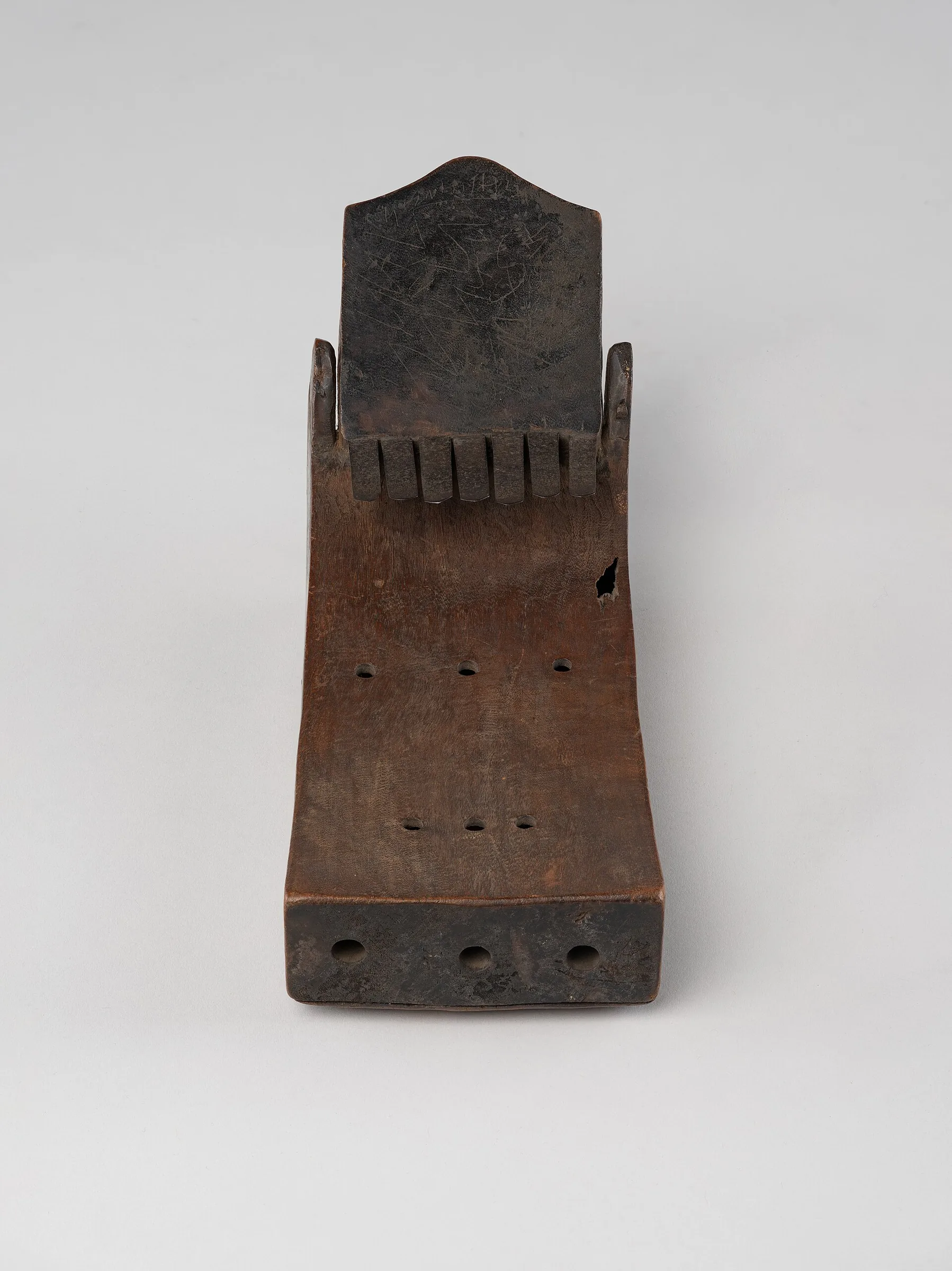
Variants often reflect small construction choices: a hollow box or a board, tine length, or the addition of a gourd or buzzing elements.
- Common feature: metal tines attached to a wooden soundboard.
- Playing technique: both thumbs play the melody and accompaniment.
- Use: ritual, domestic, or theatrical, depending on the version.
“Centuries of change have preserved the same sound-producing principle.”
Practical advice
When buying online, check the description rather than relying on the name alone. The listing often specifies the number of tines, body type, and range. For a buying guide, see our dedicated page: what is a thumb piano?
| Element | Variation | Effect on sound |
|---|---|---|
| Body | Hollow or board | Projection or a dry sound |
| Tines | Length and metal | Pitch and note duration |
| Accessories | Gourd, bottle-cap buzzers | Buzz and tone |
Sanza, mbira, and likembe: names, variants, and cultural contexts
A few dozen kilometers away, the same thumb piano may have a different name and a different place in local life. These names reflect social practices. They indicate whether the instrument is used for dancing, gatherings, or rituals.
Mapping the names helps trace cultural migrations and exchanges. The same design may have several names depending on the community and language.
Spiritual dimension: in some regions, playing creates a connection with spirits and ancestors. This sacred role shapes the instrument’s construction, repertoire, and playing techniques.
Local makers produce highly varied models. Available wood, size, resonators, and decoration serve specific purposes. These instruments remain part of living traditions and are adapted by their communities.
“A name often says more about use than about shape.”
Buying tip: check the listing and the cultural context associated with the name, especially for a handmade model. For a technical and historical comparison, see our dedicated guide: differences and uses.
A closer look at the Sansula: Hokema’s drum and kalimba hybrid, invented in 2001
The Sansula grew from a simple idea: make metal tines resonate on a drum frame. In 2001, Peter Hokema mounted a tine block on a stretched membrane held in a drum frame. The result has a sound palette immediately distinct from conventional models.
Frame, stretched membrane, and floating resonance: a distinctive playing experience
Its construction combines a wooden frame, a stretched membrane, and a small block carrying metal tines. The body becomes a hybrid that responds to the player’s movements.
The sound of this design has a floating resonance, fuller than that of a rigid board. Moving the instrument changes its tone and creates continuous effects beyond a simple “wah-wah.”
This model is well suited to relaxation, acoustic sound design, and intimate performances. The instrument offers cinematic textures for sound creators and musicians seeking an enveloping effect.
Tuning, tine count, and playing: from the standard 17-key model to models with 21 keys or more
Choosing the right range helps you progress without getting lost among the notes. It directly affects ease of learning and harmonic possibilities.
Choosing your range
To begin, choose an instrument with 10 to 15 tines. It is easy to handle, and the notes are intuitive to read.
The 17-key format remains the standard: it makes sheet music and tutorials easier to find.
Models with 21 keys or more offer an extended range for richer harmonies.
Tuning and maintenance
Tuning is done with a tuning hammer by adjusting the vibrating length of the tines.
Check the pitch with a tuner, including a mobile app, especially after transporting the instrument.
- Guide: 10 to 15 tines for simplicity; 17 for versatility; 21 or more for an extended harmonic range.
- Common keys: C major on 17-key models and F on some 21-key models; pentatonic scales encourage improvisation.
- Playing: start with the central tines, then gradually explore the outer ones.
- Care: wipe down the instrument, check the tuning, and protect the tines during transport.
Remember that tine length affects how low and how long notes sound, while body design and materials shape the vibrations.
“Good tuning is the key to a clear, lasting musical sound.”
Materials and bodies: wood (mahogany) or acrylic, hollow (sound box) or flat (board)
The body material determines the instrument’s tone and dynamic response.
Wood or acrylic. Wood offers a warm tone and a light feel. Mahogany is a good starting choice: moderate weight, accessible price, and a mellow sound. Acrylic appeals for its appearance, but it is heavier and sounds different.
Hollow or flat? A hollow body projects more sound, sustains notes longer, and enables the “wah-wah” effect. A flat model made from a board produces a quieter sound, ideal for close-up recording.
Comfort and body design. Tine spacing, body density, and shape affect how comfortably you can hold and play the instrument. Consider its weight and tine layout for your intended use, whether on stage or in the studio.
- Tine quality: the finish of the metal affects attack and tuning accuracy.
- Tip: start with a well-finished solid wood model.
To explore the choice of wood further, see our guide to choosing wood according to design and use.
“The quality of the materials affects both the sound and the pleasure of playing.”
Buying: budget, bundles, accessories, and makers
Finding a good first model means balancing price and accessories. In France, budget €30 to €50 for adequate tuning stability.
Avoid offers below €20: the tines may be uneven and the finish poor. For regular use, spending within this range supports durability and enjoyable playing.
Recommended price range
€30 to €50: good value for a beginner. Below €20: a greater risk of technical problems. Above that, you often pay for finishes or electronic components.
Useful bundles and accessories
Look for bundles that include:
- a tuning hammer
- a waterproof or shockproof case
- note stickers and thumb guards
- a beginner’s booklet
Why? These accessories reduce later expenses and make learning and maintenance easier.
Makers and models
Reliable makers available online include Gecko, Lingting, and Hluru. Their models also come in electroacoustic versions with a jack output and piezoelectric pickup for stage use.
As for materials, mahogany offers a good balance of weight, sound, and price. Acrylic has visual appeal but is heavier and often more expensive.
| Criterion | Recommendation | Impact |
|---|---|---|
| Budget | €30 to €50 | Tuning stability |
| Bundles | Hammer, case, thumb guards | Longevity and comfort |
| Materials | Mahogany or acrylic | Tone and weight |
“A good bundle saves trouble and helps you make progress faster.”
Uses: beginners, music therapy, storytellers, stage, and recording
Each use calls for a design and sound that suit its setting. Here are the models best suited to relaxation, storytelling, performance, and studio work.
Relaxation and music therapy
For music therapy, choose a wooden body with a mellow tone. Flat models offer controlled resonance and moderate volume, ideal for exploring sound and relaxing.
The sounds should stay even, without sudden volume peaks. Sustained vibrations help create a calming atmosphere.
Traveling performers, storytellers, and stage musicians
Storytellers and traveling musicians benefit from a hollow body. It projects more sound and produces a “wah-wah” effect that can punctuate a story.
On stage, an electroacoustic version makes amplification easier while preserving the warmth of the sound.
Practice and recording
Work on the accuracy of your thumbs and the pressure you apply so that notes sustain without tiring you.
In the studio, a flat model lets you capture tones accurately while avoiding unwanted reverberation.
- Players: children, beginners, therapists, storytellers, stage musicians.
- Relaxation: wood, flat model, gentle resonance.
- Storytelling and stage: hollow model, projection and effects.
- Recording: flat model or piezoelectric output for capturing sounds precisely.
“Match the design to the setting and use to get the most from its sound.”
Conclusion
At the end of this guide, remember that shape, wood, and tuning guide your choice and shape the sound. The tradition of the two-row mbira exists alongside the version modernized by Hugh Tracey, who standardized a diatonic row in 1954.
To begin, choose a wooden model with about 17 tines: it is versatile and makes sheet music easier to find. The tines and the hollow or flat body determine the resonance.
Regular care and tuning keep the sound true. To explore the historical and technical differences further, see our dedicated guide.