
A clear, practical hub for downloading sheets and tablature for the 17-key kalimba. This central guide brings together 41 free articles, rated 4.6/5 on average, and covers pieces from Frère Jacques to Zelda, Star Wars and Perfect.
Ready-to-use files: formats optimized for reading on paper, clear markers and confirmed usage rights. The resources are sorted by difficulty and theme so you can start playing quickly, even if you cannot read music.
The hub also offers tuning tips, a method for reading numbered notation and a short practice plan. The aim is simple: make progress through brief, regular sessions while enjoying the music.
To access the full collection and start right away, visit the dedicated section on Instruments du Monde.
Search intent and what this resource hub offers
Find short pieces you can use legally in one click and get started quickly. This page is for anyone who wants to play the kalimba within minutes. The files are ready for A4 printing and sorted by difficulty and theme.
What it offers: a free selection of sheet music and tablature organized for beginners and more advanced players alike.
“A mini roadmap: one nursery rhyme and one film theme in the first week.”
The hub saves time. Short versions help you develop a steady tempo and memorize pieces before moving on to full versions. This reduces frustration and helps you enjoy playing sooner.
- Filters by level, style and length.
- Direct links to files and clear markers for easy reading.
- Resources that can be used legally in France, with an average rating of 4.6/5.
| Type | Length | Level |
|---|---|---|
| Nursery rhyme | 30 to 60 seconds | Beginner |
| Short film theme | 60 to 90 seconds | Beginner / Intermediate |
| Full version | 2 to 3 minutes | Intermediate / Advanced |
This hub makes learning easier: filters, markers and clear files help you make the most of every session. These resources make it easy to start learning your instrument today.
17-key kalimba, or thumb piano: the essentials for getting started
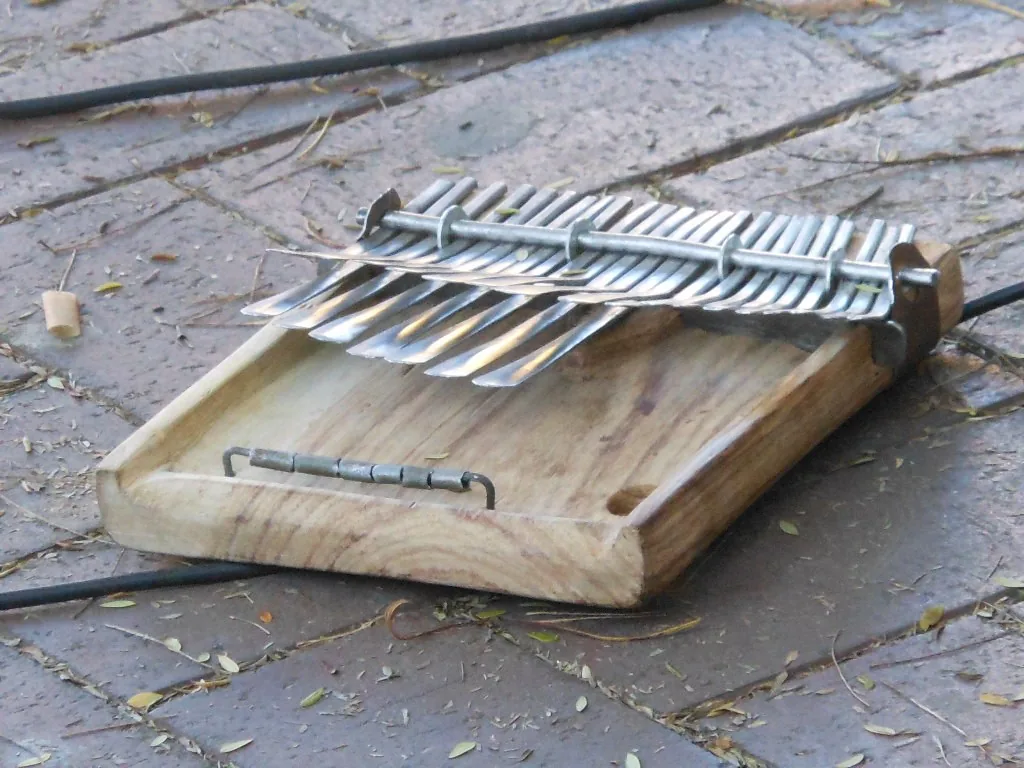
This compact instrument has a clear, warm sound that invites you to play from your first session. It has 17 metal tines mounted on a wooden resonator. Its tone is warm and distinct enough to carry short melodies.
Getting comfortable: you play mainly with your two thumbs. The movements feel natural and cause little fatigue when your posture is right. Keep your shoulders relaxed and the instrument steady for better control of the notes.
Its gentle sound often masks small inaccuracies. This can speed up learning and build confidence. Its range lets you play nursery rhymes, short film themes and romantic songs.
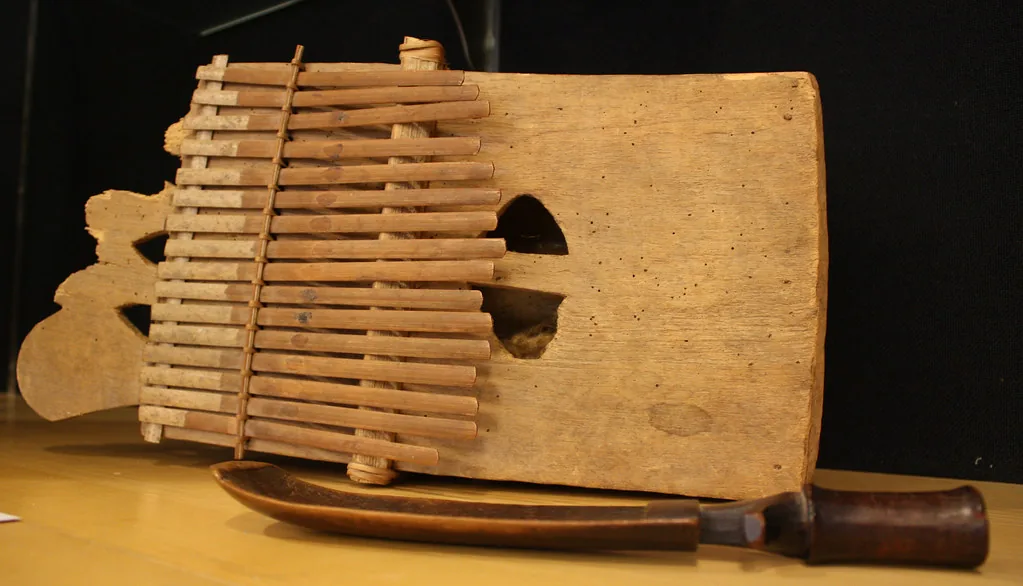
Historical context: modern standardization, popularized by Hugh Tracey, made tuning and playing more accessible to beginners. A good first goal is to learn a short melody on the central tines so you can feel how the instrument resonates and sustains notes.
“Play slowly at first, then let the resonance guide your tempo.”
Tune your 17-key kalimba properly before printing
Taking two minutes to tune your instrument prevents a lot of frustration while playing. Careful tuning makes the tone clearer and the sheets easier to follow.
Step-by-step method with a tuner app
Install a reliable app such as gStrings, Smart Kalimba or Free Universal Tuner. Find a quiet place and open the tuner.
- Pluck the center tine (C/C4 ≈ 261.63 Hz) and check the note.
- To raise the pitch, push the tine inward. To lower it, pull it outward.
- Use a small hammer for fine adjustments: tap downward if the note is too sharp and upward if it is too flat.
- Work from the center outward, then make one quick final pass to check that the tuning is consistent.
Common mistakes and a quick routine
Avoid using too much force or ignoring beats between neighboring notes. Those beats signal a tuning issue that needs a small adjustment.
Quick routine: spend 2 to 3 minutes before each session checking the central and outer tines. Place the instrument on a stable surface and record a short test.
“Careful tuning immediately improves the clarity and musicality of your playing.”
Reading kalimba sheet music and tabs: a simple numbered method
Numbered notation turns each number into a precise movement on the tines. Match each number to a particular tine so you can play without reading standard notation. Start by putting small numbered stickers on the central tines. Remove them gradually as muscle memory develops.
Numbering and left-hand/right-hand markers
- Each number corresponds to a particular tine: memorize its position, then play without looking.
- Mark the left and right hands clearly on vertical tablature, which is read from top to bottom.
Rhythm, tempo and vertical reading
Count aloud slowly and set the metronome to a slow tempo. Observe rests as carefully as notes. Read a short line, repeat it several times and continue only when the note lengths are even.
Short, practical exercises
- Read one line, then repeat it. Next, join two sections of 4 to 8 measures.
- Alternate thumbs to make your attacks more even.
- Listen to the original recording to adjust your intonation and note lengths.

“Start slowly: rhythmic accuracy comes before speed.”
Printable PDF Sheet Music for 17-Key Kalimba
Finding the right sheet takes only seconds when you know where to click.
Where to click and which format to choose: visit the complete collection on Instruments du Monde. Its 41 free articles are sorted by difficulty and include pieces from Frère Jacques to Zelda, Star Wars and Perfect.
Check readability before printing
Open the file and zoom in. Check the left- and right-hand markers and make sure the numbers are clear. The notes and fingerings should be easy to read.
A4 format and printing tips
Print on A4 paper at 100% to preserve the alignment of markers and margins. Download the latest revised version to benefit from layout corrections.
Short and full versions: a learning strategy
Start with short versions to strengthen your rhythm and memory. Move on to full versions once the pattern is steady. The average rating of 4.6/5 reflects the quality of the sheet music and tablature offered.
| Type | Use | Benefit |
|---|---|---|
| Short version | Warm-up, 30 to 90 seconds | Quick to memorize |
| Full version | Complete practice, 2 to 3 minutes | Develops phrasing |
| Revised sheet | Download | Updates and corrected fingerings |
Tip: organize your sheets by theme in a binder to track your progress and quickly find your favorite pieces.
Resources that can be used legally in France: reliable links and printing tips
Checking where files come from and how you may use them helps avoid surprises. Choose sites that clearly state whether files are free, identify the publisher and explain permitted uses. Avoid sources with unknown origins and no legal information.
Instruments du Monde is a useful starting point: 41 free articles sorted by level and theme, with an average rating of 4.6/5. The site covers a broad popular repertoire and makes searching easier.
Before printing, preview the file on a phone with a PDF app. This helps you spot misalignment and poorly formatted pages.
- Legal criteria: clearly stated free access, permitted use and an identified publisher.
- Print settings: A4 at 100%, margins preserved, and orientation and contrast optimized.
- Filing: a binder organized by level and theme, with notes on fingerings, goals and update dates.
- Quick check: flip through the pages to make sure hand markers and numbers remain consistent.
Finally, favor transparent platforms. To get started, explore this reliable, comprehensive collection: recommended collection.
Choose the right sheet music level: beginner, intermediate or simplified advanced
Matching the difficulty to your skills helps you progress faster and with greater confidence. Here is a practical guide to choosing your level and knowing when to move up.
Beginner: simple numbered arrangements, few chords and repeating patterns. This level is ideal for learning to read tabs and keep a steady rhythm.
Intermediate: a faster tempo, denser passages and small chords. You work on precise transitions and sustained phrasing.
Simplified advanced: arpeggios, countermelodies and independent thumbs. The focus is on polyphony and legato control.
- How to assess your level: look at the density of the score, the presence of chords, the tempo and the ornaments.
- When to progress: master 3 to 4 short pieces without mistakes at a slow tempo before moving to the next level.
- Rhythm and transitions: maintain a steady tempo and smooth changes to avoid overexertion.
Always keep one easy piece in your routine to maintain your musicality while learning more difficult material.
“Record yourself regularly: careful listening reveals your progress and what you need to improve.”
Very easy nursery rhymes and classics for a gentle start
Begin with simple tunes that develop coordination and memory. Nursery rhymes have repeating patterns, a moderate tempo and a comfortable range. They help you learn numbered notation and play notes evenly.

Frère Jacques, Au clair de la lune, Happy Birthday
Frère Jacques helps steady your thumb coordination through its repeating patterns.
Practice Au clair de la lune slowly using numbered notation; give the rests room to shape the phrase.
Arrange Happy Birthday with the melody on the right and a simple bass part on the left to harmonize the song.
Playing tips: numbered notation, rests and coordination
- Start with short versions, then move on to the full version.
- Record yourself to check that the central and outer notes sound equally loud.
- Pay attention to sustained notes and musical breathing to shape a beautiful melody.
- Practice for 5 to 10 minutes each day to strengthen your reading and sense of rhythm.
“Repeating short songs each day builds musical memory.”
Film and animated-film music arranged for 17-key kalimba
Film and animated-film themes provide ideal patterns for working on phrasing and tone color.
Choose short, recognizable melodies. They let you explore articulation without being overwhelmed by technical challenges.
Comptine d’un autre été, Spirited Away, Hedwig’s Theme, Up, Under the Sea
Comptine d’un autre été: play slow arpeggios and let the central notes ring for a dreamy sound.
Spirited Away: work on glissandos and gentle dynamics. A light touch makes transitions smoother.
Hedwig’s Theme: isolate the main motif first. Master the short version before moving on to the full piece.
Up: treat rests as expressive elements. Allow slight slowdowns at cadences.
Under the Sea: start with a lively version of about one minute, then develop the full arrangement.
Practicing phrasing, glissandos and returns to tempo
Practical method: use a metronome to steady passages and repeated sections.
- Choose short themes to practice phrasing without too many technical demands.
- Let long notes breathe and observe the rests.
- Isolate motifs and repeat them at a slow tempo before speeding up.
“Used well, a metronome turns attempts into pieces you can play confidently.”
Accessible pop songs and romantic melodies
Popular tunes are ideal for gently developing dynamics and touch. Here, four pieces provide simple examples for structuring your practice and growing as a musician.
Perfect: follow a two-week plan—week 1 for slow arpeggios and tempo control; week 2 for adding dynamics and strengthening the chorus. Practice one phrase at a time.
A Thousand Years: favor subtle glissandos and dynamic contrasts. Sensitive playing carries the emotion without making the kalimba arrangement sound heavy.
River Flows in You: use an even touch and let the notes ring for a piano-like effect. Consistent fingering makes the melodies clearer.
Yesterday: bring out the main line and keep the bass light so it does not cover the melody. Scores annotated with fingerings reduce hesitation and speed up memorization.
- Use annotated scores and record yourself to adjust the balance between verse and chorus.
- Alternate your routine: practice the melody one day and arpeggios the next to develop your musicality without fatigue.
- Listen to the original versions regularly and set a tempo that feels comfortable.
“A weekly recording shows your progress more clearly than repetition alone.”
Favorite video games and anime: a fun repertoire for making progress
Familiar video game and anime themes provide an ideal repertoire for developing musicality and memory. They boost motivation and give you clear landmarks for structuring practice.
Zelda’s Lullaby is played in 12/8: count in three compound beats and break the line into short measures. Play each measure slowly, then join them once the pulse is steady.
Lost Woods requires you to isolate the syncopations. Repeat these patterns slowly in a loop, note where they fall in the beat, then increase the speed gradually.
- Super Mario: use a metronome, keep a steady tempo and lightly accent the strong beats.
- Unravel & Golden Wind: divide the pieces into sections of 4 to 8 measures to improve coordination and progress gradually.
- Game of Thrones, Star Wars, Pirates: use structural markers (intro, A, B, coda) to organize your session.
Practical tip: use clear tablature adapted to 17 tines so the markers line up correctly. End each session with a theme you know well to stay motivated.
“Working in short sections turns a complex piece into a success you can repeat.”
A simple practice plan: 15 minutes a day, visible progress
With fifteen minutes of focused practice, you can see progress within days. This routine helps you organize your time and maintain a daily practice habit without fatigue.
Suggested structure: 3 to 4 minutes of warm-up, 8 to 10 minutes on a section of 4 to 8 measures, then 1 minute of free playing for enjoyment and improvisation.
Session structure
Warm-up: relaxed fingers and hands, slow scales and rhythmic markers.
Focused section: work on 4 to 8 measures. Repeat them slowly in a loop, then gradually raise the tempo.
Free minute: play without constraints to keep it enjoyable and try what you have learned.
Self-assessment
Make a quick recording at the end of each session, for example with RecForge Lite. Listen for 1 minute and note 1 or 2 things to revisit the next day.
Realistic goals: master a nursery rhyme in 3 days and a short theme in 7 days. Practice at the same time each day to build the habit.
“Practice slowly first, check that each note sounds clear, then increase the speed.”
| Phase | Length | Goal |
|---|---|---|
| Warm-up | 3 to 4 minutes | Prepare your fingers and steady your reading |
| Focused practice | 8 to 10 minutes | Master 4 to 8 measures and improve accuracy and rhythm |
| Free minute + recording | 1 minute + 1 minute | Keep it enjoyable, record yourself and note 1 or 2 points |
Practical tips: set a daily practice time, alternate melodies and arpeggios for variety, and check that your notes sound clear before speeding up.
To expand your repertoire and find suitable sheets, explore this useful collection.
Essential tools: tuner, metronome and tablature editor
A few apps and editors are enough to structure daily practice. These tools establish solid foundations in tuning and tempo, then let you create and save your own sheets.
gStrings: accurate tuning and a steady tempo
gStrings combines a tuner and metronome. In seconds, you can check the tuning and start a steady beat to work on rhythm.
Simply Kalimba: microphone recognition and guided challenges
This app listens through the microphone and gives immediate feedback. Weekly challenges help sustain motivation and encourage gradual learning.
Kalimba Tabs Editor Pro: create, annotate and save
This editor lets you create and edit tablature, annotate fingerings and store files in the cloud. Its library contains more than 500 pieces for inspiration.
Suggested routine (15 minutes): 5 minutes with the metronome, 5 minutes with the note-recognition app and 5 minutes with the collection. Listen through headphones to hear the small differences in attack and sustain that characterize this instrument.
“These tools give your progress structure and save weeks of trial and error.”
Pro tips: a better sound with less effort
Small adjustments to posture and touch can improve the clarity and warmth of your tone.
Neutral posture, light thumbs and stability
Keep your shoulders relaxed and your wrists flexible. Relaxed hands prevent tension and make your fingers easier to control.
Keep your thumbs light: a gentle attack produces a rounder, steadier sound.
Two useful playing positions
Holding the instrument in your hands gives you fine control and allows glissandos and other effects. Placing it on a table offers greater comfort and consistency.
Alternate positions to suit the exercise and take short breaks to prevent tension.
Care, effects and balance
Care: wipe the tines after each session, protect the instrument from moisture and avoid impacts. Keep your nails short and remove jewelry or clothing that makes noise.
Simple effects: create vibrato by playing near the rear holes, a wah-wah effect with the front hole, and glissandos to add color to a phrase.
To balance chords, aim for an even volume without pressing too hard with your thumbs.
| Tip | Benefit | Frequency |
|---|---|---|
| Flexible wrists, relaxed shoulders | Less tension, better control | Every session |
| Wipe the tines | Preserves tone and durability | After every session |
| Alternate between hands and table | Fine control or stability | Depending on the exercise |
To explore these simple techniques further and find sheets and practice advice, visit this practical collection.
Conclusion
To sum up, remember three simple things that can transform your playing: regular tuning, relaxed posture and suitable numbered notation.
Adopt a short routine: 15 minutes a day is enough. This brief daily practice time strengthens memory and accuracy.
Use free resources that you can access legally (41 articles, rated 4.6/5). Start with short scores, then move on to full versions.
Choose a familiar piece and play its first phrase to begin learning. Review your goals each week and move up a level when you can play the piece cleanly.
To get off to a good start, pay attention to tuning, posture and reading, then enjoy playing your kalimba.