
Learn to read quickly with NMCA, which pairs Do with 1, Re with 2, Mi with 3, Fa with 4, Sol with 5, La with 6, and Ti with 7.
This reading method is ideal for beginners. It links the tines directly to note pitches without requiring a complete command of music theory.
Key points: octaves are marked with dots, asterisks, or apostrophes. Notes in parentheses or joined by a hyphen are played together.
Read numbered and lettered sheet music from left to right and top to bottom. Kalimba tablature is read from bottom to top and reflects the instrument’s layout.
Check the tuning: most 17-tine instruments are tuned to C major. Use KTabS to write or listen to tablature and learn faster.
The rest of this guide explains why you should start today, then covers numbers, letters, tablature, and common mistakes, including confusing 0 with 4, misreading octaves, and grouping notes incorrectly.
Why learn to read kalimba sheet music today?
Knowing how to read sheet music opens doors: musical notation is universal and makes it easier to share arrangements with musicians around the world.
Reading connects sight and sound. It supports memory and speeds up learning. Research by the CNRS and Emmanuel Bigand shows that musical practice strengthens auditory and visual memory.
For beginners, following written notes gives structure to technique and prevents you from relying entirely on your ear. It also builds independence: you can play melodies you have never heard without depending on a video.
Practical benefits: greater confidence in a group, a lasting repertoire, and time saved. Reusing sheet music helps you consolidate pieces without memorizing everything.
- Progress faster with a daily reading routine.
- Take part more easily in workshops and educational projects.
- Develop your skills: start with numbered sheet music, then move on to tablature and your own transcriptions.
What you need to know before you begin
Understanding the shape and order of the tines makes getting started easier.
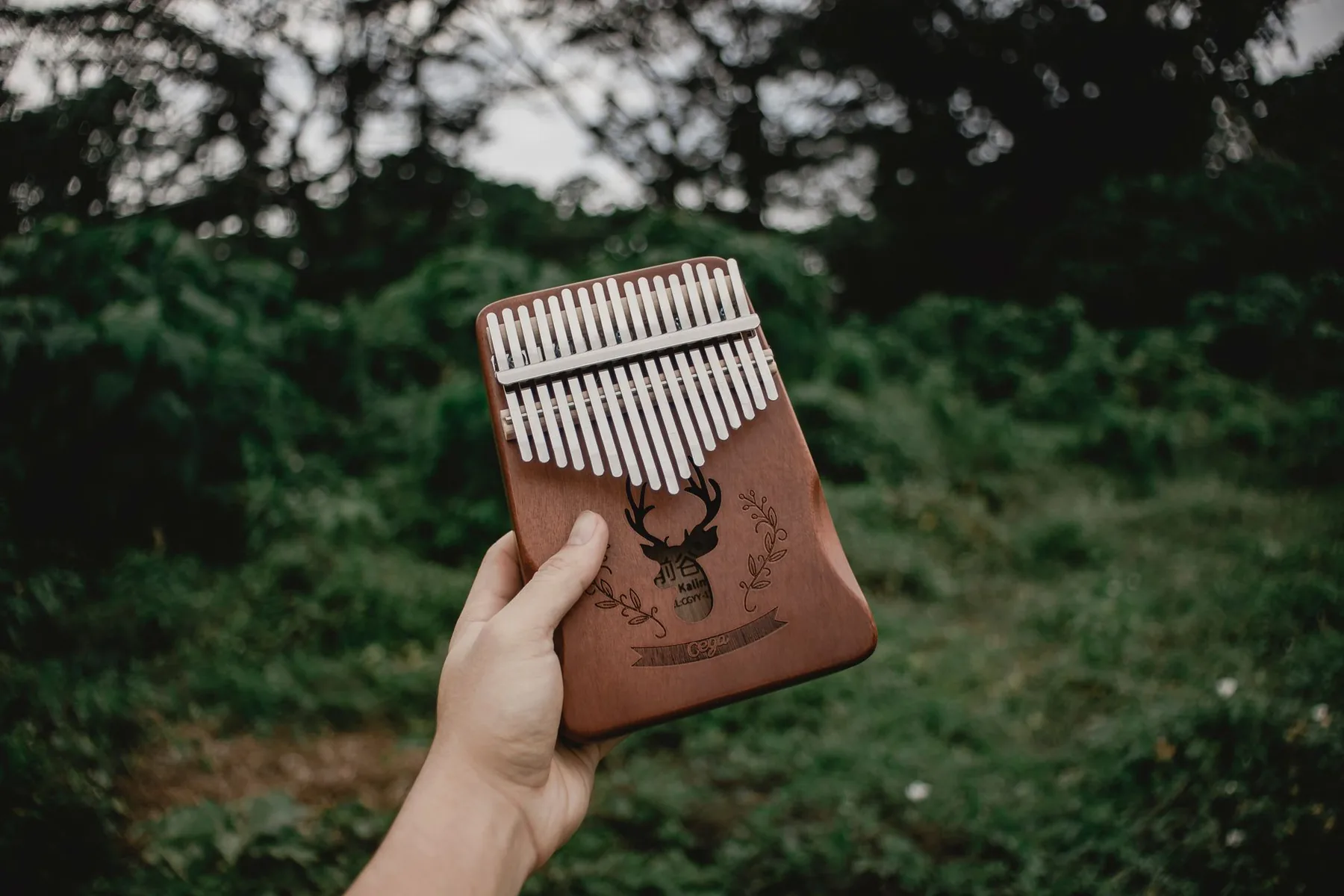
The instrument has metal tines attached to a resonating body. The notes rise in a zigzag pattern on either side of the center. Your thumbs pluck the tines to produce clear, steady sounds.
A practical layout: the right-left alternation, popularized by Hugh Tracey, helps you play melodies and chords without changing position.
Three common notation systems
There are three useful systems: NMCA numbers (1 to 7), letters (C D E F G A B), and tablature designed for the instrument. Each has an advantage: numbers are quick, letters use internationally recognized note names, and tablature shows the instrument visually.
- Example: Do can be shown as 1 in numbered notation or C in letter notation, and appears in a specific column in tablature.
- Reading order: numbers and letters → left to right, then top to bottom; tablature → bottom to top, panel by panel.
Tuning and range
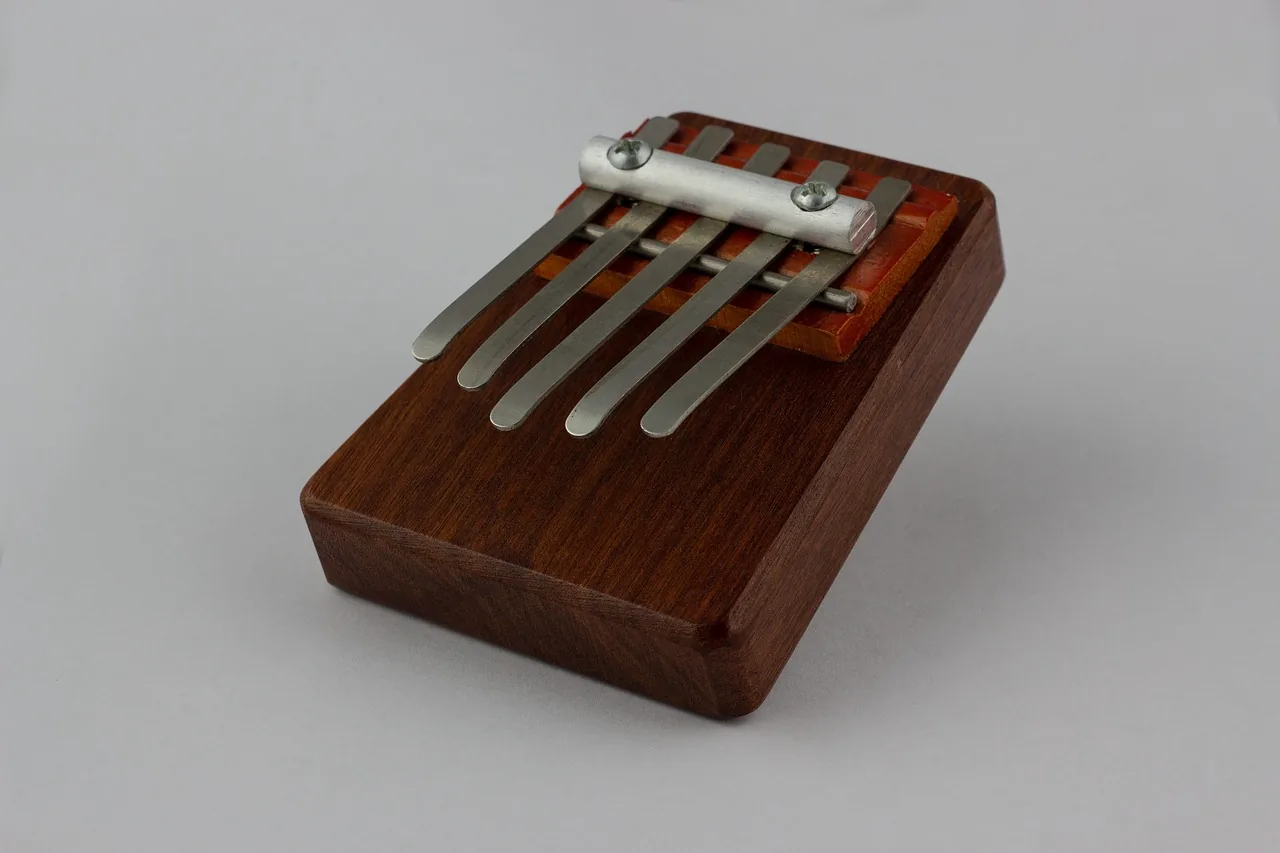
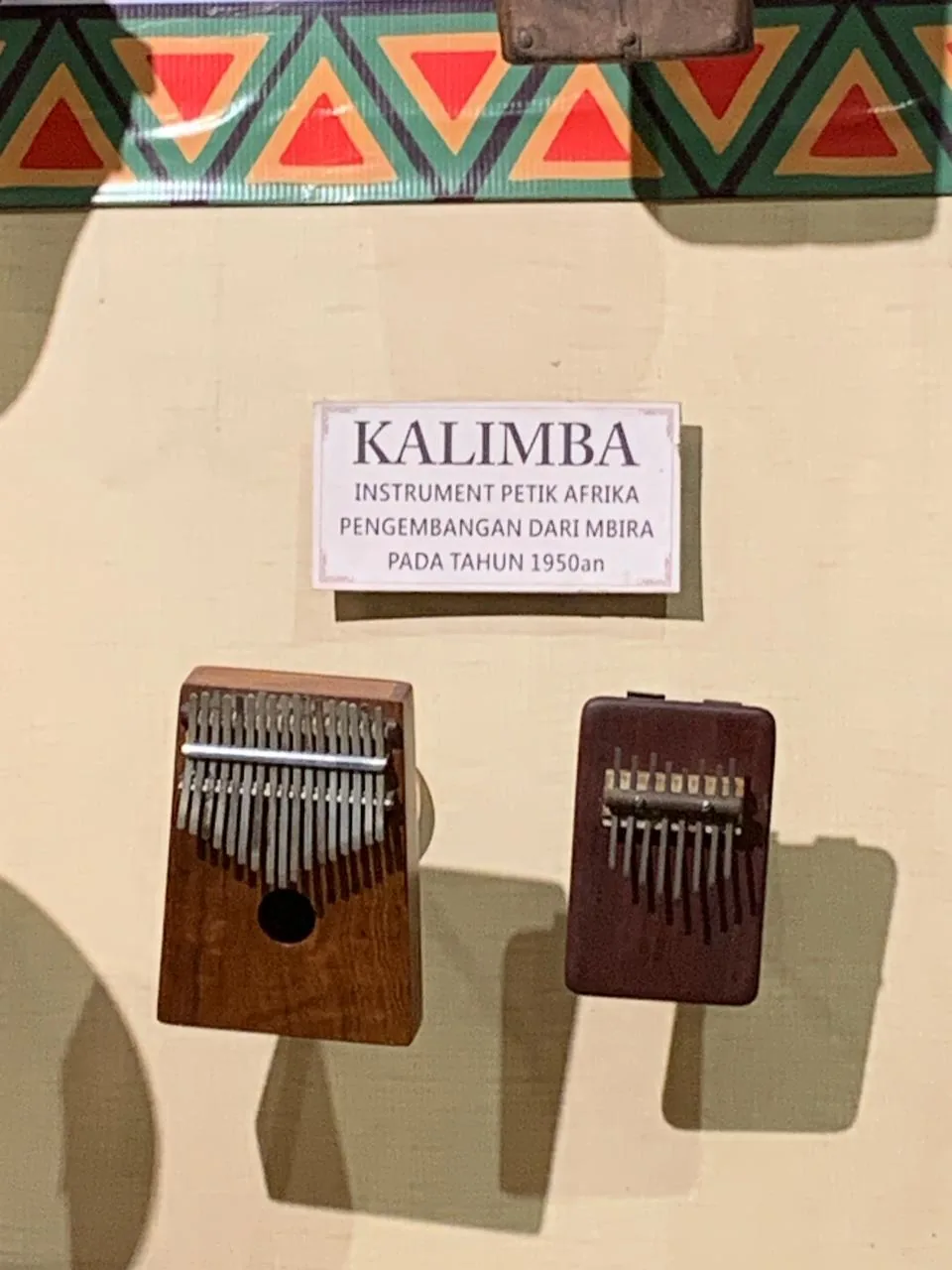
The number of tines determines the range and available octaves. Models with 17 or 21 tines offer more octaves, while an 8-tine instrument requires transposition or an adapted arrangement.
Practical tip: check the tuning, often C major, before using sheet music. For more instructions, see a guide to reading sheet music.
Numbered Kalimba Sheet Music: Understanding This Simple System
The NMCA chart pairs 1 with Do, 2 with Re, 3 with Mi, 4 with Fa, 5 with Sol, 6 with La, and 7 with Ti. Remember this visual tip: 1–3–5 often form the basis of a chord, helping you memorize the numbers and notes quickly.
Octaves and symbols
A dot, an asterisk (*), or an apostrophe (’) after a number raises its pitch by one octave. Two marks indicate two octaves above.
Reading order
Follow the sheet music as you would read English text: from left to right and top to bottom. Keep the order of events to preserve the piece’s rhythm and meter.
Playing notes together and other techniques
Numbers in parentheses or joined by a hyphen sound together. Play them with both thumbs, or use a glissando when indicated.
- Example: (5 1°) or 5-1° creates a fifth and an octave; start slowly.
- 0 may indicate a rest; do not confuse it with 4 (Fa).
- Mark the tines with stickers to improve accuracy.
“Reading accurately helps you play better: precise movements follow clear notation.”
Practical tip: practice with a metronome and keep your attacks even before adding chords or ornaments.
Sheet music with letters: a bridge to letter notation
Using the letters C D E F G A B helps you identify pitches on your instrument quickly.
Conversion: C = Do, D = Re, E = Mi, F = Fa, G = Sol, A = La, B = Ti. Letters follow the same logic as numbers: read them from left to right and top to bottom.
Reading and conventions
Octaves use the same symbols, and notes in parentheses are played together. This keeps the melody intuitive to read.
Advantages and limits
Advantage: this notation is useful for quick transcription and for putting English-language resources into practice. A simple “C E G” is played as a C major arpeggio.
Limit: without rhythmic information, meter and tempo remain unclear. You need to know the song or add a metronome and annotations.
| Notation | Letter | Solfège | Use |
|---|---|---|---|
| Melody | C, D, E | Do, Re, Mi | Quick transcription |
| Chord | C E G | Do Mi Sol | Arpeggio or simple chord |
| Octave | C’ or C. | High Do | Vary the tone |
| Rest | — or 0 | — | Add timing information |
Beginner tip: start with familiar melodies and add rhythmic cues. To go further, a guide to reading sheet music will introduce you to tablature, which includes note lengths and rests.
Read kalimba tablature like a map of the instrument
Reading tablature means following lines that correspond to the tines beneath your thumbs. Each column represents a tine. Read from bottom to top, moving from one panel to the next from left to right.

Columns, panels, and visual cues
Picture the page as a map: one column corresponds to one tine. Move up the column to see which note to play.
On larger sheets, finish the panel on the left before moving to the next one on the right. Adding letters or numbers at the bottom helps you find notes faster.
Note lengths and rhythmic values
Rhythmic symbols indicate duration: whole note = 4 beats, half note = 2 beats, quarter note = 1 beat, eighth note = 1/2 beat. Follow these values to place each note accurately in the measure.
Rests, “0,” and phrasing
Rests shape a phrase. A “0” may mean that no note is played. Use whole, half, or quarter rests to organize the flow of the music.
Playing examples
Notes aligned horizontally form chords. Quick sequences on neighboring tines create arpeggios.
To play a glissando, brush several tines with your nail to spread out a chord.
To write and listen to your files, learning to read tablature and testing it with KTabS is an excellent practical exercise.
“Following the visual grid reduces guesswork and speeds up learning.”
Meter, tempo, and rhythmic notation for accurate reading
Rhythmic structure organizes each measure and gives the music its flow.
Time signatures and barlines
Measures divide a piece with barlines. They help you count beats and read steadily.
In 4/4, a quarter note lasts one beat and each measure contains 4 beats.
| Value | Symbol | Equivalent |
|---|---|---|
| Whole note | 𝅝 | 4 beats |
| Half note | 𝅗𝅥 | 2 beats |
| Quarter note | 𝅘𝅥 | 1 beat |
| Eighth note | 𝅘𝅥𝅮 | 1/2 beat |
Tempo in BPM: play at the right speed
Tempo in BPM sets the speed. For example, 75 BPM is slow and 120 BPM is moderate.
Set a metronome to steady your playing and keep the beats in place.
Key symbols and interpretation
A fermata holds the phrase. A tie extends a note without playing it again.
A triplet fits three notes into the time normally taken by two. An augmentation dot adds half the original duration; a second dot adds a further quarter.
Example: two tied quarter notes last as long as a half note; an eighth-note triplet fits into the time of two eighth notes.
Look for these symbols to the left of the grid or on the tablature’s timeline.
Begin without triplets, then add them slowly with a metronome. To go further and learn to write music, see a guide to learning tablature.
“Mastering rhythm turns reading into musical expression.”
Write your own kalimba sheet music and tablature
Transcribing a tune you hum lets you save it and play it again.
Choose a format for your goal
There are three options: NMCA numbers for speed, letters for sharing with English-language resources, or tablature for precise tine positions.
From idea to page
Practical steps: record the idea quickly, define its structure, including measures and tempo, then write the melody in numbers, letters, or tablature.
Check that it is easy to read, play the piece to test it, and correct the note lengths or rests.
Tools and good habits
KTabS lets you create, listen to, and export accurate tablature. Use visual cues: colored stickers and note names at the bottom of the panels.
- Tip: write the chorus in numbers first, then convert it to tablature to add rhythm and chords.
- Prepare versions for 8 and 17 tines so more musicians can play the pieces.
To improve, consult a guide and learn to read sheet music before creating your own files.
Equipment, tuning, and visual cues for better reading and playing
A well-tuned instrument prevents pitch errors and makes learning easier. Start by checking whether your model is tuned to C major, a common tuning for 17-tine models. Some pieces call for another key, such as F major; adjust the tuning if needed.
Adapting the music: if your instrument has fewer tines, simplify the melody or transpose it into a playable range. Avoid forcing octave leaps if they make the piece confusing to play.
Visual cues and practical setup
Place colored stickers on key tines, such as Do and Sol, to find notes faster. Some models have engraved dots that indicate octaves; use these markings.
- Lighting and posture: practice under steady light and hold the instrument in a consistent position.
- Beginners: limit octave changes at first and focus on the main melody.
- Learn more: use step-by-step tuning guides and tine charts to memorize the layout quickly.
“Good visual cues turn reading into a natural movement.”
Common mistakes and practice tips for beginners
Common mistakes often slow a beginner’s progress, but a simple, regular routine can correct them quickly.
Frequent mix-ups: distinguish “0” (a rest) from “4” (Fa) at a glance. Always check octave symbols (°, *, ’) to avoid unexpected leaps.
Before you begin, check how many tines the piece requires: it may not suit an instrument with too few.
An effective routine
- Practice for 15 minutes a day at first, with a metronome set to a slow tempo.
- Start with familiar songs and pieces, such as “Frère Jacques,” then add arpeggios and chords.
- Set small goals: read a short phrase, read the tablature for a motif, and play two measures smoothly in sequence.
- Count the beats aloud to develop your sense of meter and rhythmic placement.
- Keep your attacks even, use both thumbs, and maintain nails suited to glissandos.
“Accurate rhythm and clean attacks matter more than speed.”
For a practical exercise, isolate a triplet, practice it slowly with a metronome, then put it back into the full melody. Patience and a clear method will help anyone who wants to learn to read and play kalimba music.
Conclusion
Quick recap: numbers, letters, and tablature together give you a complete way to read and play kalimba music.
The essentials: learn numbers for pitch, letters for internationally recognized equivalents, and kalimba tablature for duration and position.
Method: progress step by step with a metronome, visual cues, and a checked tuning. Short daily sessions develop coordination and reading skills.
Create your own sheet music and tablature, share them with KTabS, and exchange ideas with other musicians. Regular practice and curiosity will take you further.
To learn more: explore new melodies and techniques, including triplets, glissandos, and extended chords, to enrich your playing and sharpen your reading.