
Welcome: this guide helps you play “Happy Birthday” on a 17-tine instrument tuned to C major.
You will learn the melody in numbered notation and letter notes, its 3/4 rhythm, and key phrases such as 1 1 2 1 4 3. The guide explains tuning, reading notes, and ways to produce clear sounds.
Resources: free PDF sheet music, tablature, and video tutorials will help you progress.
This guide offers a structured way to memorize the melody over a few regular practice sessions. If your model does not have a B-flat tine, adaptations are provided to preserve the melody.
To find sheet music and explore the subject further, see this practical guide: sheet music and tutorials.
Introduction to the Happy Birthday melody on kalimba
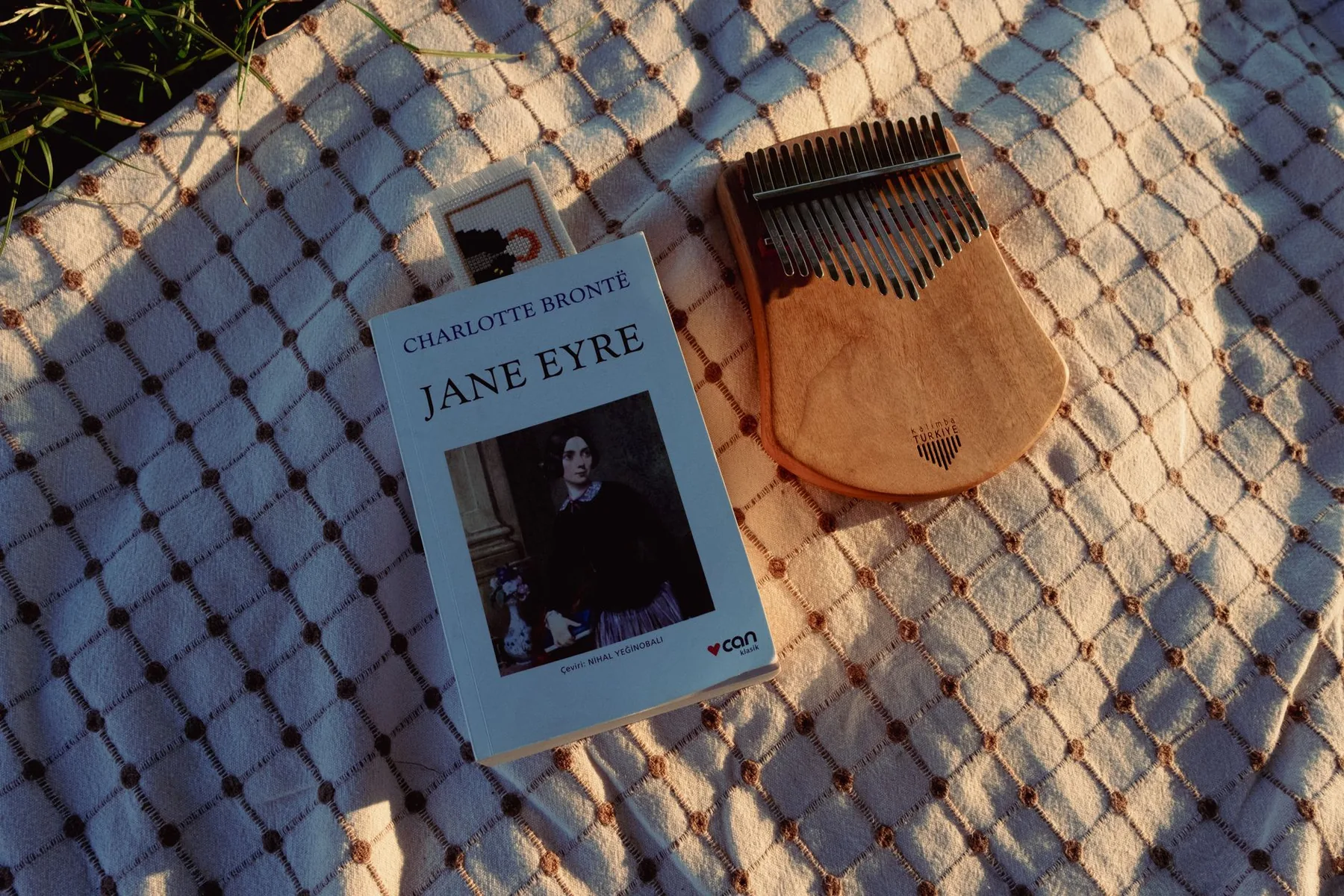
The thumb piano is a simple instrument with a warm sound. It has metal tines attached to a wooden body. Beginner models with 17 tines are often tuned to C major, with the center tine playing C.
This melody, known around the world, works especially well when played with the thumbs. Its phrases are short and repetitive, making the notes and movements easier to learn and remember.
The principle is simple: pluck the tines with your thumbs to produce clear notes. Numbers or letters are often engraved on the tines, so you can follow the sheet music without reading traditional staff notation.
- Musical practice: develop your ear, sense of rhythm, and coordination.
- Quick to learn: a little sheet music and a few reference points are enough to achieve a satisfying result.
Listen to the melody first to get a feel for its phrasing. Then use resources such as 17-tine sheet music to get started. The following sections explain each step so this song can become your first success on the instrument.
Understanding your 17-tine kalimba in C major
Knowing the tine layout makes your first melodies easier to read and play. On a 17-key instrument tuned to C major, the longest tine in the center is C. The notes then rise alternately to the left and right, creating a visual pattern that is easy to follow.
Layout and root note
Middle C sits at the center, and the scale spreads out alternately on either side. This arrangement helps you find the notes you need for the song.
Numbers and letters
Manufacturers often engrave numbers (1 through 7 and 1’ for the octave) or note names from C to B. Reading numbers or letters then becomes interchangeable, making kalimba sheet music accessible even if you cannot read music.
Solid or hollow body
A hollow body offers more resonance and sustain. A solid model produces a drier, more precise attack that helps articulate the melody.
- Find tines 1 (C), 4 (F), 5 (G), and 6 (A) on your instrument.
- Highlight tines 1, 4, and 5 or add small stickers if their engravings are hard to see.
Tip: knowing the tine layout makes sheet music easier to read and helps you play other melodies. For a simple, practical tutorial, follow this video guide.
Preparing your instrument for a clear, in-tune sound
Before any lesson, prepare your instrument so every note sounds clear and in tune.
Check the tuning
Open a chromatic tuning app and select the target notes of the C major scale. Play each tine in turn and read the note displayed. Identify any differences and note which tines need adjusting.
Using a tuning hammer
Gently tap the tip of a tine upward to raise its pitch. Tap it toward the base to lower the pitch. Make small adjustments until the note is stable.
Holding and plucking
Hold the instrument securely in your palms, with your thumbs above the ends of the tines. Keep your wrists relaxed for an even attack.
- Pluck with the pad of your thumb for a rounded tone.
- Use your thumbnail for a brighter sound.
- Warm up briefly: play 1‑3‑5‑8 arpeggios to check the notes.
Advice: retune if necessary before studying the kalimba sheet music. Good tuning and consistent thumb placement make your playing steadier and more musical.
Reading sheet music, tablature, and numbered notation
Knowing how to read the notation lets you focus directly on sound and rhythm. Numbered notation makes the melody easier to learn. It tells you which tine to pluck without requiring traditional music reading skills.
Numbered and letter notation: a practical guide
In C major, use this correspondence: 1 = C, 2 = D, 3 = E, 4 = F, 5 = G, 6 = A, 7 = B, 1’ = high C.
Tip: alternate between numbers and letters when reviewing to reinforce your reference points.
Visual tablature: quickly finding the right tine
Tablature shows where the tines are located. Read the position, then pluck the indicated tine.
- Keep the octave convention (1 for lower C, 1’ for higher C) to avoid confusion.
- Highlight the beginnings of phrases on the sheet music so you do not lose your place.
- Plan your thumb movements ahead: tablature helps you avoid unnecessary motion.
| Number | Note | Position |
|---|---|---|
| 1 | C | in the center, on the longest tine |
| 4 | F | on the left or right, depending on the model |
| 1’ | high C | one octave higher, on a short tine |
Happy Birthday kalimba sheet music, step by step
Break the song into short sections to commit the movements and melody to memory.
Phrase A — 1 1 2 1 4 3
Practice: pluck each note separately. Repeat the sequence 1→2→1→4→3 until your articulation is steady.
Phrase B — 1 1 2 1 5 4
A slight variation: replace the phrase’s second-to-last note with 5. Practice moving from A→B without a break.
Phrase C — 1 1 1’ 6 4 3 2
Add the high C (1’), then descend through 6→4→3→2. Aim for a balanced sound across the lower and higher notes.
Phrase D — 7♭ 7♭ 6 4 5 4
The 7♭ (B-flat) may not be available on every model. If necessary, substitute another note to preserve the character of the melody.
- Metronome: set it to 3/4 at a moderate tempo. Play one note at a time before joining the notes together.
- Connecting exercise: play C→D without a pause and check the clarity of the notes.
- Tip: alternate between numbered notation and tablature and sheet music to find each tine more easily.
- Record short excerpts to check your tuning and natural accents.
Rhythm, tempo, and playing in three beats
The waltz’s three-beat movement guides each measure and gives the song its character. Feeling “ONE-two-three” helps align your fingering and breathing.
Counting in 3/4: ONE-two-three, the natural rhythm of a waltz
Accent the first beat; keep the next two lighter. This brings out the important notes and makes each musical phrase clearer.
Choosing a moderate tempo, then gradually speeding up
Start at around 70 to 84 BPM. Play slowly to master the transitions, then raise the tempo little by little as you become comfortable.
- Mark the beginnings of phrases on your kalimba sheet music to synchronize your fingering with the beat.
- Practice in short loops: repeat two measures at a time several times without tiring yourself out.
- Sway or tap your foot to “ONE-two-three” to establish the rhythm.
- Use a metronome app with an accent on the first beat or a silent click every few measures.
“A steady tempo brings out the notes and makes the song clearer.”
Allow a musical breath between A and B, then between C and D: a short, controlled pause lets the melody resonate without rushing.
| Action | Purpose | Suggested tempo |
|---|---|---|
| Count ONE-two-three | Establish the accent | 70 to 84 BPM |
| Two-measure loops | Secure the transitions | Start slowly, then speed up |
| Accented metronome | Test your rhythmic independence | Accent on the first beat |
Adapting the melody if your kalimba has no B-flat
When 7♭ is missing, phrase D can lose some of its character. Do not worry: several simple solutions preserve the flow and keep the piece easy to sing.
Substitutions in plain C major
Replace 7♭ with a direct descent through 6→5→4. This variation maintains the melodic flow and avoids a leap that might sound out of place.
Chromatic option and transposition
A chromatic instrument gives you access to the exact 7♭, but requires more attention to the tablature and tine positions.
- Mark your choices on the kalimba sheet music to avoid hesitation.
- Try several substitutions by ear to preserve the character of the melody.
- If needed, transpose the opening line by changing note 1 and adjusting the notes and tablature.
Advice: write down both versions, with and without B-flat, on your sheet music and check the melodic line by playing with someone who sings.
To find templates and write down your variations, consult tablature and sheet music resources.
Technical tips for a smooth performance
Clean transitions between the left and right thumbs are often the key to a polished performance. Good coordination reduces hesitation and makes the melody sound more natural.
Clean transitions between the left and right thumbs
Hold the instrument with both hands and keep your wrists relaxed. Pluck downward with the pad of your thumb or your nail, depending on the effect you want.
Practice slow back-and-forth patterns such as 1‑2‑1‑4‑3. Repeat them in short loops to master the movements.
Adjust the instrument’s angle so your thumbs always touch the tines in the same place.
Playing with the thumb pad or nail: tone and control
Using the pad of your thumb produces a warm, controlled sound. The nail adds brightness and projection.
Alternate between the two approaches to suit each part of the song. Add small accents on the first beat to shape the rhythm.
- Record short passages to detect scraping and uneven attacks.
- Study the tablature slowly to make the movements automatic before speeding up.
- Practice often but briefly: muscle memory develops through short repetitions.
Relaxed, consistent playing improves the sound of every song you play.
Common mistakes and how to correct them
Small adjustments to your tuning and movements can correct most problems. Neglected tuning produces discordant sounds: notes “beat” against each other and lack clarity.
Unstable tuning and discordant sounds
Check each tine with a chromatic tuning app and make small corrections with a tuning hammer. Retune until the note is stable.
Confusing 1 and 1’: octave reference points
It is common to confuse 1 (lower C) and 1’ (higher C). Find the center tine and mark 1 and 1’ on your sheet music and, if necessary, on the instrument.
- Identify: notes that “beat” → retune.
- Eliminate mechanical noises: check the screws and bridge, then reposition the tines.
- Control the attack: pluck neither too deeply nor too lightly.
- Practice rhythm: use a metronome and repeat loops of two or three notes to correct awkward transitions.
- Choose the notation, numbers or letters, that guides you best while you play.
Tip: mark reference points on your kalimba sheet music and repeat slowly to establish precise movements.
Learning and memorization strategies
Short, frequent sessions are the most effective way to remember a musical line.
Choose daily sessions of 10 to 15 minutes over one long weekly session.
Short, regular repetitions to learn the melody
Practice one phrase at a time with your sheet music before joining two phrases, then playing the whole song. This helps the movements become automatic.
Focus on accurate transitions rather than speed; speed will come through controlled repetition.
- Alternate between reading the kalimba sheet music and playing from memory to strengthen your visual and movement-based recall.
- Record one session a week to identify what you can improve.
- Use listening cues, such as breaths between phrases, to remember the structure.
- Vary the tempo slightly during practice to strengthen your rhythmic stability.
- Use dedicated exercises to reinforce the difference between octaves 1 and 1’ and avoid mixing up the notes.
Set simple goals: play phrase A well today; play A and B tomorrow. Review your annotated sheet music before you begin again.
Learning the kalimba through songs can also speed up your progress by giving you familiar melodic reference points.
| Action | Duration | Purpose |
|---|---|---|
| Daily sessions | 10 to 15 min | Establish the movements and learn the notes |
| Phrase-by-phrase practice | 2 to 5 min per phrase | Master transitions and memorize phrases |
| Weekly recording | 5 to 10 min | Measure progress and correct problems |
Practical resources: PDFs, videos, and more sheet music
Use downloadable files to practice offline and annotate your pages. Free PDFs provide “Happy Birthday” tablature adapted for 17-tine models in C major.
Following a video step by step helps you see thumb placement and phrasing in 3/4. Play the demonstration, read the tablature silently, then practice along slowly.
- Print the sheet music and mark fingerings, breaths, and rhythmic cues.
- Compare several layouts to choose the one that suits you best.
- Keep PDFs on your phone so you can play your thumb piano anywhere.
- Build a folder of pieces to track your progress and annotate different versions.
- Share a short video with friends or family to get feedback and build confidence.
| Resource | Use | Advice |
|---|---|---|
| PDFs and tablature | Offline practice and annotations | Print and mark fingerings |
| Video tutorial | Observe hand position and phrasing | Follow slowly and repeat |
| 17-tine models | Practice suited to beginners | Choose a light-colored wood for a clear sound |
“Read, watch, play: the step-by-step method speeds up learning.”
Cultural background: origins and memorable performances
The familiar melody we play comes from a school song published in 1893, Good Morning To All, composed by Mildred J. Hill with words by Patty Smith Hill.
From “Good Morning To All” to versions around the world
In the early 20th century, the melody was adapted in English as “Happy Birthday To You.” A written example appeared around 1912.
After decades of copyright disputes, the song was declared to be in the public domain in 2015. This decision made it easier to share sheet music and new interpretations.
Iconic moments in the song’s history
- 1962: Marilyn Monroe sings for John F. Kennedy in a memorable televised moment.
- 1963: the Beatles perform the song, increasing its popularity.
- 1969: the Apollo 9 crew sings it in orbit, a sign of its worldwide fame.
| Year | Event | Impact |
|---|---|---|
| 1893 | Publication of “Good Morning To All” | The song’s educational origins |
| 1912 | Transition to “Happy Birthday To You” | Worldwide adoption as a celebration song |
| 2015 | Public-domain status recognized | Free use of sheet music and adaptations |
These moments turned the melody into a ritual sung thousands of times every day around the world. Many local versions exist, with more than 40 translations.
Advice: listen to a few versions and watch a short historical video to inspire your performance. Add a brief historical note to your sheet music: it gives the moment more meaning when you play and strengthens your musical expression.
Conclusion
The numbered sequences and practical advice here support your daily practice. You now have the reference points you need to understand the instrument, check its tuning, read kalimba sheet music, and manage the 3/4 rhythm.
Choose short, regular sessions to make the notes more reliable and your thumb movements smoother. Keep your tuning settings and annotations so you can play the piece again with confidence.
PDFs, tablature, and video tutorials are available to continue your learning. Once you have mastered this piece, expand your repertoire with other simple melodies.
Play this song at a birthday celebration: the pleasure of playing your thumb piano for others is immediate. Share your performance and spread the joy of music.